Free Shipping, Discounts & Other Psychological Triggers That Make Consumers Buy
FREE SHIPPING - DISCOUNTS
Published On: March 12, 2026
Ever find yourself clicking "buy" almost immediately when you see "free shipping" or "flash sales"? Even when you're not planning on spending a dime? It’s not just a coincidence or a lack of self-control. It’s not even your lack of ability to save money. It’s all about cleverly implemented psychological triggers in marketing campaigns that target your subconscious mind directly rather than your rational thinking.
In the cutthroat world of e-commerce, especially in countries like the USA and UK, brands aren’t just selling products to consumers. They’re managing consumer behavior. From "Zero Price Effect" to FOMO, understanding consumer buying behavior is the only way to realize how every transaction we make is influenced by discounts and consumer psychology.
Why Free Shipping Motivates Buyers
In today’s e-commerce world, free shipping is no longer an added bonus but rather an integral part of consumer behavior. For most consumers, paying a shipping fee at the time of purchase is akin to a "hidden penalty" for the convenience of online shopping.
The major reason free shipping is an effective motivator is because it reduces friction during transactions. The customer is prepared to spend only up to $50 on seeing the price of the item. However, if there is an unexpected jump to $57.95 on the checkout page, this is perceived as a "loss" rather than an additional service fee. This causes an immediate pause in the buying process. Knowing e-commerce free shipping trends shows that those businesses that do not offer this "perk" have difficulty with high bounce rates.
Key Stats & Facts on Free Shipping:
- The Conversion Killer: 48% of online shoppers abandon their shopping carts because of unexpectedly high extra costs, including shipping, taxes, and fees.
- The 93% Rule: A staggering 93% of online shoppers are motivated to buy more products if free shipping is available.
- Value Over Speed: Out of all shoppers, 82% are willing to wait longer for their package to be shipped if it means they can have free shipping instead of paying extra to have it shipped faster.
- The Power of the Threshold: Retailers use the strategy of "Threshold Shipping" (e.g., free shipping on orders over $75) to boost the Average Order Value (AOV). Research has shown that 81% of Americans confess to having purchased additional, and often unnecessary, products simply to "qualify" for the free shipping offer.
Are you buying more products simply to qualify for free shipping? Try our
Impulse Buying Checker and determine if the additional cost is really saving you money or just costing more.
The Zero Price Effect Explained
To understand the tremendous effectiveness of the "Free" strategy over the "Discounted" strategy, let's explore the concept of the "Zero Price Effect," which was famously coined by behavioral economist Dan Ariely. In his studies, Ariely found that the difference between the prices of $0.01 and $0.00 is much more significant than the difference between the prices of $0.51 and $0.50. This is because, with the zero price, the cost of the transaction is eliminated.
Free Shipping Benefits for Consumers
These free shipping benefits to consumers are not limited to saving a few dollars. Free shipping provides a "hassle-free" state of mind. When we buy a discounted product, we still perform a "mental" risk/benefit analysis. "Is this shirt worth 15 dollars?" "What if I don't like it?" But when a service is free, our brain stops thinking about what's wrong with it. The "Zero Price Effect" states that:
1. Humans are loss-averse: We fear losing money on a "bad deal" more than we value gaining money on a "good deal."
2. Free = No Risk: Because there is no monetary cost to this shipping, the consumer thinks that they "have nothing to lose."
Why It Outperforms Percentage Discounts
In many A/B tests done by Shopify and Amazon, a "Free Shipping" offer beats a "20% Off" discount offer even when it actually ends up saving the customer more money. Why is this? Because free shipping is a "simpler" and "more emotional" win that does not require any calculations on our part.
Want to know how you can capitalize on these psychological wins without breaking the bank? Take a look at these
Free Shipping Coupons on various brands to see what's currently on sale.
Discounts and Consumer Psychology
You may be wondering how discounts affect buying decisions. The reason for this, however, is far deeper than just the concept of "saving money." It’s about the neurochemical reward, the dopamine rush, of getting a "win" over the retailer.
How Pricing Affects Buying Decisions
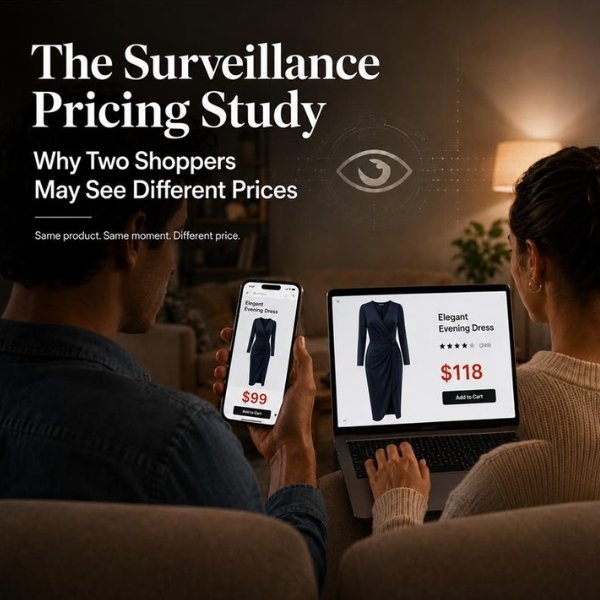
Price is not just a number; it's a sign. High prices are a sign of quality, while sudden drops in price are a sign of an "opportunity." Successful discount and coupons strategies that boost sales often involve finding the "sweet spot" where the customer feels like they are getting a significant advantage.
The concept of how pricing affects buying decisions can help determine the strategy to use for specific demographics within the USA and the UK.
Popular Discount Strategies:
- BOGO (Buy One Get One): This utilizes the Zero Price Effect. Getting something for free, even for the second item, is far more emotionally appealing than getting 50% off of two items, even though the math is the same.
- Flash Sales: This creates urgency and scarcity, forcing the brain to prioritize the "loss" of the deal over the "cost" of the product.
Social Proof: Trust Through the Crowd
Within the USA and the UK, social proof marketing is one of the fundamental elements of the consumer decision-making factors. This is due to the fact that people are tribal by nature. We look to others to validate our decisions.
- The 99% Rule: According to recent data, 99% of consumers read reviews before making a major purchase.
- User-Generated Content (UGC): A photo of real people wearing the product, like the dress, has 5x the influence of a photo shoot. This is because, for the consumer, the product has "proof" of working in the real world.
FOMO & Scarcity: The Fear of Missing Out
The limited-time psychological effect is one of the most powerful tools in the marketer’s toolbox. This tactic forces the consumer’s brain to stop overthinking and start buying.
FOMO in marketing or the desire to avoid the feeling of regret, is one of the most powerful impulse buying triggers. When a marketer uses "Only 2 left in stock!" or "Sale ends in 02:45:12," they are tapping into the consumer’s biological need to survive.
- Scarcity: The more scarce the product, the more valuable the product will be.
- Urgency: Limited time offers stop the consumer from "over-thinking." By the time the consumer has logically decided they don’t need the product, the offer has expired, and they buy the product anyway, just in case.
Reciprocity: The Power of the "Gift"
Reciprocity marketing tactics leverage the human need to repay someone if they give us something.
In e-commerce, this looks like:
- Free Samples: Includes a free sample of perfume with a beauty order.
- Valuable Content: Offering a free "Styling Guide" or "How-To" video.
This way, if a brand gives something of value first, it’s much more likely that the consumer will "repay" that value by making a purchase.
Personalization & The Anchoring Effect
Personalized recommendations for e-commerce websites through artificial intelligence is one of the biggest innovations in how we shop. "Items you might like" are displayed on e-commerce websites. By showing consumers "Items you might like," brands actually reduce decision paralysis. By making it easier for us to make decisions, brands see a 49% increase in unplanned purchases.
The Anchoring Effect in Pricing
Anchoring is when a retailer shows you a high "original price" and then shows you another price next to it. For example, you see a watch marked down from $500 to $199.
The original price of $500 is used to anchor how much value we perceive in the product. Even if it was never meant to be sold at that price, it makes us feel like we're getting an absolute steal at the discounted price of $199.
How Top Brands Apply These Tactics
Major retailers have mastered the art of the "nudge."
- Amazon: Using "Prime" to create free shipping and making it something that creates brand loyalty.
- SHEIN: They masterfully use social proof with influencers and scarcity with constant countdown timers.
- ShipBob: Logistics companies like ShipBob, which are now state-of-the-art, help smaller brands provide the same 2-day free shipping experience as the giants, thus creating a level playing field for them psychologically.
Conclusion
The science of free shipping psychology, along with the psychological triggers in marketing, tells us that we are not as rational as we think. Brands pay millions to understand our psychology, from the way they present the discount to the use of the word 'free' to close the deal.






 Clothing Deals
 Clothing Fashion Style
 Fashion Trends & News
 New Stores
 Ocassion Wear
 Review

